
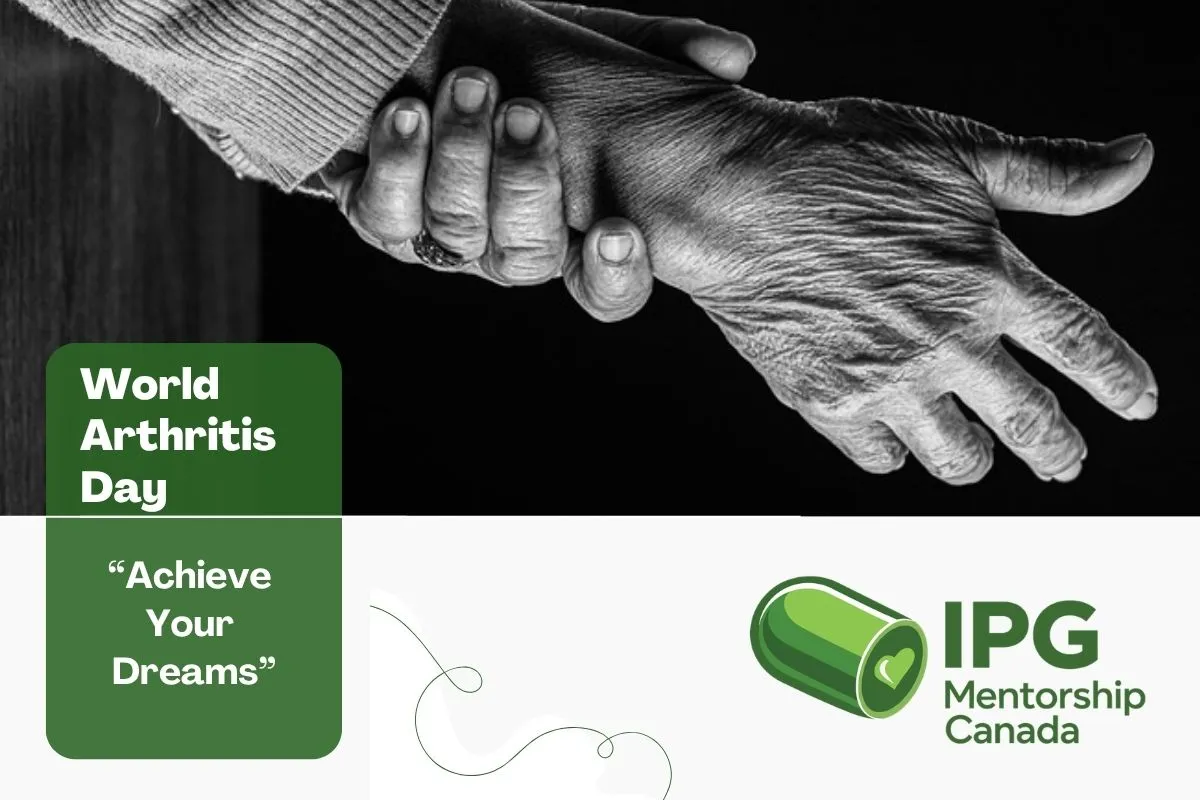
World Arthritis Day
The global theme for World Arthritis Day 2026 is "Achieve Your Dreams".
The movement highlights a crucial truth: with early diagnosis, proper treatment, and a strong support system, individuals living with arthritis and rheumatic and musculoskeletal diseases (RMDs) can manage their condition and continue to pursue their personal and professional aspirations despite physical challenges.
In Canada, arthritis affects over 6 million people.
It is a leading cause of chronic pain and long-term disability and a primary reason patients visit community pharmacies daily.
Understanding arthritis in Canada isn't just about mechanism of action, it is about empowering patients to reclaim their mobility and Achieve Your Dreams, navigating expanded pharmacist scope, and delivering proactive, patient-centered care.
1. The Landscape: Prevalence & Burden of Arthritis in Canada
To practice effectively, an IPG must understand the epidemiological scale of musculoskeletal conditions across the country.
Approximately 1 in 5 Canadian adults lives with arthritis. Driven by an aging population, that number is projected to rise to 1 in 4 by 2040.
Major Diagnostic Types:
Osteoarthritis (OA): The most common form of arthritis, affecting over 4 million Canadians. It is a progressive degenerative joint disease that heavily impacts weight-bearing joints (knees, hips) and hands.
Inflammatory Arthritis (Rheumatoid Arthritis, Psoriatic Arthritis, Ankylosing Spondylitis): Autoimmune conditions characterized by systemic inflammation, joint destruction, and extra-articular manifestations.
Gout: High-prevalence metabolic arthritis driven by hyperuricemia, requiring acute flare management and long-term urate-lowering therapy.
2. Subpopulations Impacted & Health Disparities
Arthritis does not affect all Canadians equally. Understanding vulnerable demographics is essential for clinical decision-making and patient communication.
Sex & Gender Disparities: Women are disproportionately affected by arthritis. Nearly 60% of all Canadians living with osteoarthritis and up to 75% of those with Rheumatoid Arthritis are women. Hormonal factors, immune system differences, and longer life expectancy contribute to this disparity.
Working-Age Adults & Disrupted Dreams: Over half of all Canadians with arthritis are under the age of 65. It is a leading cause of workplace disability and chronic pain among adults in their prime working years (ages 35–64)—directly impacting career progression, personal goals, and quality of life.
Indigenous Populations: First Nations, Inuit, and Métis communities experience significantly higher rates of inflammatory arthritis—often diagnosed at younger ages with more severe disease progression—compounded by historical barriers to specialized care and systemic inequities.
Seniors & Geriatric Considerations: In older adults, arthritis intersects with polypharmacy, mobility loss, fall risks, renal impairment, and cardiovascular comorbidities, making pain management a delicate clinical balance to preserve independence.
Explore our PEBC Mentorship products
3. How Canadian Pharmacists Empower Patients to "Achieve Their Dreams"
Pharmacists sit at the front line of chronic disease management. Under the "Achieve Your Dreams" framework, our role expands beyond dispensing into active advocacy:
Early Triage & Timely Referral: Early diagnosis is critical to preventing irreversible joint damage, especially in inflammatory arthritis where the "window of opportunity" determines long-term mobility. Pharmacists evaluate red flags (e.g., prolonged morning stiffness > 30 mins, systemic symptoms) and refer patients early for rheumatology assessment.
Expanded Scope & Treatment Optimization: Pharmacists manage chronic pain regimens, adapt/renew DMARD prescriptions, administer injectable biologics, and prescribe for minor ailments or acute flares under collaborative practice agreements to maintain therapeutic momentum.
Comprehensive Safety & Stewardship:
NSAID Stewardship: Screening for GI bleed risk, hypertension spikes, renal impairment, and drug interactions (e.g., ACE inhibitors + diuretics + NSAIDs = "The Triple Whammy").
Biologic & DMARD Safety: Monitoring baseline lab work (CBC, LFTs, SCr), screening for infection risks, counseling on subcutaneous injection technique, and managing vaccination schedules (ensuring live vaccines are given before initiating immunosuppressive therapy).
Building the Support System: Recommending non-pharmacological strategies, occupational therapy tools (e.g., easy-grip devices, non-childproof caps for hand OA), physiotherapy referrals, and lifestyle modifications that help patients remain active and independent.
4. The PEBC Blueprint: How Arthritis Is Tested
The PEBC evaluates your ability to manage both acute joint pain and complex autoimmune therapy safely across Part I (MCQ) and Part II (OSCE):
Part I: Qualifying Exam (MCQ): Expect scenario-based questions covering:
Therapeutic Selection: Choosing appropriate first-line agents based on comorbidities (e.g., choosing topical vs. oral NSAIDs in elderly patients with CV or GI risk factors).
DMARD Protocols: Dosing, renal adjustments, and toxicity monitoring for Methotrexate (e.g., co-prescribing Folic Acid), Leflunomide, Sulfasalazine, and Biologics/JAK inhibitors.
Acute vs. Chronic Gout Management: Differentiating acute flare treatments (Colchicine dosing, short-term NSAIDs/steroids) from chronic prophylaxis (Allopurinol titration based on eGFR and target uric acid levels).
Part II: Qualifying Exam (OSCE): These stations test empathy, safety checks, and practical counseling:
Patient Counseling on Biologics/DMARDs: Explaining handling/storage, missed doses, side effects, and when to withhold therapy (e.g., active infections or upcoming surgeries).
Addressing Adherence Barriers: Counseling a patient who is fearful of side effects or struggling with joint pain that makes opening pill bottles difficult.
Empathy & Functional Assessment: Assessing how joint pain impacts daily function, work, and personal goals rather than relying solely on a pain score.
Actionable Steps for Your Prep Strategy
Master the "Red Flags" & Contraindications: Build clear mental decision trees for when oral NSAIDs are strictly contraindicated (e.g., severe CKD, active peptic ulcer disease, recent CABG, uncontrolled heart failure).
Practice Injection & Specialty Counseling Out Loud: Practice counseling a standardized patient on how to administer a subcutaneous autoinjector or pre-filled syringe out loud, including infection warning signs and storage guidelines.
Connect Pain to Patient Goals: In OSCE practice, ask: "How is this joint pain affecting your day-to-day life, work, or activities you enjoy?" Demonstrating a goal-oriented, functional assessment aligns directly with Canadian practice standards.
The Final Connection
Navigating a chronic condition like arthritis requires resilience, early intervention, and an unshakeable belief that physical limitations do not define one's future.
As an International Pharmacy Graduate working through your Canadian re-licensing journey, you share that exact spirit of resilience. You are overcoming immense obstacles to achieve your dreams of practicing as a licensed pharmacist in Canada.
When you master musculoskeletal care, as an epidemiological reality, a complex pharmacotherapy domain, and a core clinical skill—you equip yourself to help thousands of future patients manage their health, reclaim their mobility, and pursue their own dreams alongside you.
If this post resonated with you, please let me know. I want us to have a community together. Send me an email: [email protected]
Share your suggestions of topics you'd like discussed. This is our safe space.
Explore our PEBC Mentorship products
"Achieve Your Dreams!"