
The 7-Figure Pharmacist (part 2)
Which tier are you currently standing in, and which aligns with your long-term vision?
Did you think about it?
Which Pharmacist appealed to you the most? Leave it in the comments below.
In part one, we stripped away the noise and looked at the underlying mechanics of career wealth.
Now, let's step back into that café and break down each individual pharmacist persona.
How do you strategically choose the right path for your life?

1. The PharmD Pharmacist (The Builder)
As an IPG, this table hits close to home. The vast majority of international graduates enter the Canadian job market holding a BPharm credential from their home country. However, the Canadian university standard has completely transitioned into an entry-level PharmD.
This creates an immediate, heavy layer of peer pressure. To decide if an upgrade makes sense professionally, you must ask yourself one diagnostic question:
"What are my ultimate professional goals?"
Your answer will determine if you should pursue a PharmD or focus on clinical certifications.
When is a PharmD Essential?
If your long-term goal requires leaving the dispensary entirely to secure competitive hospital residency opportunities, clinical specialist roles, university faculty seats, or clinical research positions within major pharmaceutical corporate headquarters, a PharmD becomes a professional asset.
When are Specialized Certificates More Practical?
If your goal is to stay within community practice but maximize revenue, getting your Certified Diabetes Educator (CDE), Certified Respiratory Educator (CRE), or Additional Prescribing Authorization (APA - Alberta specific) is a more practical approach. These allow you to immediately monetize expanded provincial billing codes at the counter.
The Average Builder vs. The Specialized Builder
It is critical to realize that hospital pharmacists, CDEs, CREs, and APA practitioners are mathematically still Builders. Why? Because their economic structure is fundamentally tied to linear income. If a hospital clinical pharmacist or a community CDE does not physically show up to work a shift, (assuming no paid time off), no money is generated. They are trading personal hours for money and are bound by institutional salary ceilings.
Entering the Canadian market at the Builder stage allows an IPG to develop a unique, robust toolkit that acts as the absolute bridge for a successful cultural and professional transition:
Canadian Healthcare Literacy: Navigating provincial drug formularies, therapeutic substitution guidelines, third-party insurance systems, and the logistics of the public health framework.
Frontline Communication Mechanics: Mastering the art of Canadian patient rapport, counseling diverse demographics, and clinical collaboration with local prescribers under high-pressure scenarios.
Clinical Adaptation: Converting international medical knowledge into specific Canadian guidelines, brand names, and localized practice laws.
The Builder's Trap: Burnout
Canada currently features over 10,600 licensed community pharmacies serving patients nationwide. Within this massive healthcare infrastructure, between 70- 77% of the entire Canadian pharmacist workforce works directly at the community level as Builders. They form the vast foundation of the profession.
One of the heaviest traps for an International Pharmacy Graduate in Tier 1 is Builder Burnout.
Standing on your feet for a grueling 12-hour corporate retail shift under relentless metrics, short staffing, and demanding workflows can make your career feel like an exhausting dead end.
Many IPGs think burnout is just "part of the price you pay" to live and work in Canada.
It is not.
Burnout is not inevitable, it is often the result of navigating the job market without a clear, protective strategy.
If you want to protect your mental health, insulate your career, and preserve your passion for patient care, here are 5 non-negotiable ways to beat Builder Burnout.
1. Stop Job Searching from Desperation—Your License Is an Asset
When you spend years fighting through document evaluations, qualifying exams, and provincial requirements, it is easy to view landing a job as a favor someone is doing for you.
Hmm, actually no.
Change that lens immediately.
Stop searching for jobs from a place of desperation. Your pharmacist license is a high-value asset. You are a highly educated, clinically trained professional entering a healthcare system facing massive labor shortages. You have options. When you recognize your worth, you stop settling for toxic environments out of fear.
2. Move Beyond Major Cities (Understand Supply & Demand)
Job opportunities follow the basic laws of economics: supply and demand.
In major urban centers (like Toronto, Vancouver, or Calgary), there is a high supply of pharmacists concentrated in small geographic areas. The result? Saturated job markets, flat wages, higher corporate pressure, and lower-quality job offers.
When you look at mid-sized cities, regional hubs, or smaller communities, the equation flips: low supply, high demand. You don't have to move to the middle of nowhere to find a great quality of life. Smaller towns and regional centers often offer drastically higher pay, lower living costs, far better working conditions, and communities that truly value your presence.
3. Set Standards and Advocate for Them Early
Never step into a new workplace simply hoping the pharmacy owner or store manager will treat you well. Go in knowing your standards, communicating them clearly, and advocating for yourself from day one.
In your interviews and contract negotiations, ask direct questions about workflow support, overlap hours, quota expectations, and meal breaks. Be fair, reasonable, and professional—but be clear about what you need to practice safely and sustainably. Owners respect professionals who respect themselves.
And if they don't, do not work there. It's that simple.
4. Know Your "WHY" Before You Sign the Offer
Not every day in the dispensary will be smooth sailing. Healthcare is unpredictable, and you won't love every single task or protocol in your workspace.
That is why you must know WHY you are in that specific space.
Are you here to stack capital quickly to buy your first home?
Are you here to master Canadian minor ailments and prescribing guidelines?
Are you here for schedule stability while your children are young?
When you know your underlying purpose, a tough shift won't spiral you into negative thoughts or sour your whole experience. You realize the friction is temporary, but your strategy is intentional.
5. Be Intentional About Rest—Own Your Voice
You do not exist at the mercy of your employer. Working yourself to exhaustion isn't proof of dedication, it's a fast track to clinical errors and personal burnout.
Be fiercely intentional about building rest into your schedule. Set firm boundaries around your days off, guard your personal time, and refuse to let constant shift-coverage calls consume your life. Own your voice. Never stay in an environment or work for an employer that refuses to treat you like a human being.
The IPG Skill Benefit at Tier 1 (The Builder)
Entering the Canadian market at the Builder stage provides the essential clinical foundation required for a successful transition. At this level, an IPG gains deep Canadian Healthcare Literacy, mastering provincial drug formularies, therapeutic substitution rules, third-party insurance billing nuances, and public health logistics. You sharpen your Frontline Communication Mechanics, learning how to build immediate patient rapport, navigate culturally diverse demographics, and collaborate effectively with local prescribers under pressure.
Most importantly, it gives you the practical space for Clinical Adaptation: converting your international medical expertise into Canadian practice standards and provincial health laws.
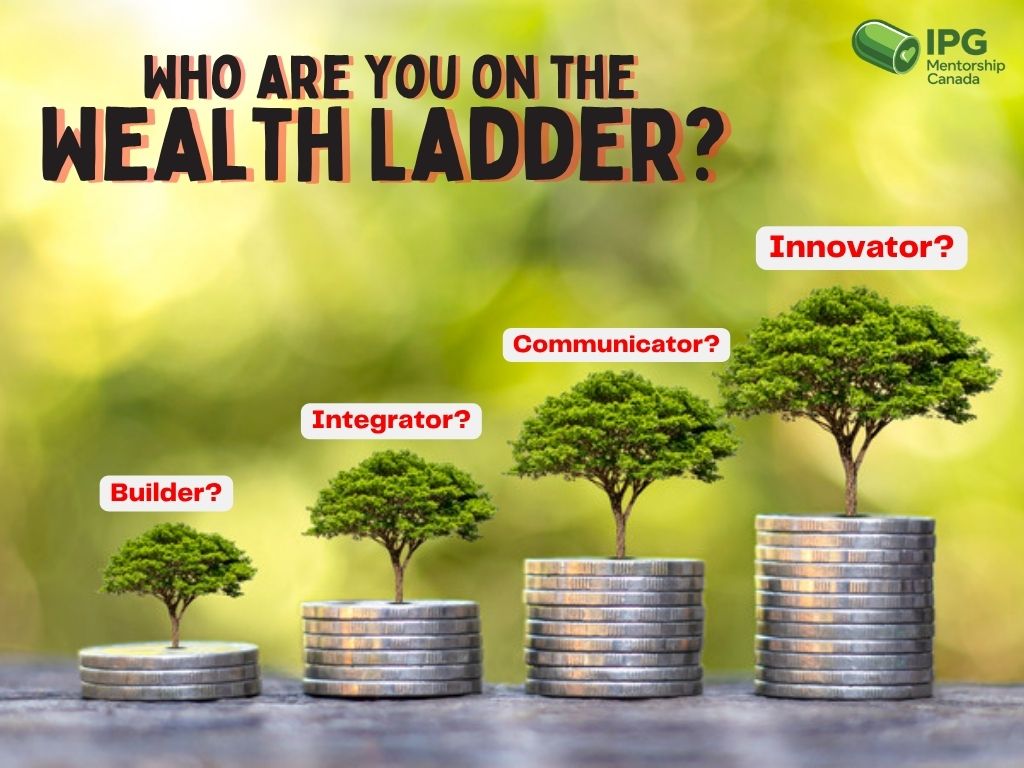
2. The Veteran Community Pharmacist (The Integrator)
Look at the pharmacist who evolved from a community staff Builder into a Pharmacy Manager, and finally into a local Pharmacy Owner.
Canadian patients love a face they know and who knows them. Many IPGs move to Canada with their families, looking for a neighborhood equipped with good schools, parks, playgrounds, family activities, a faith community, and room to develop personal hobbies. For them, climbing through the ranks of a local community pharmacy that offers long-term growth, while providing the logistical room to be close to home, available for school drop-offs, and present for afternoon pick-ups, is precisely what success looks like.
It is defined by stability, safety, and steady growth.
Is your income capped here? Yes.
Do you have complete time flexibility or total control over your schedule? Not fully.
However, flat income caps and strict shift parameters are not the sole determinants of success. Serving a local community and embedding yourself into its fabric can be exactly what your version of fulfillment looks like.
Furthermore, stepping into the Integrator role unlocks an extraordinary business-management skill set that acts as massive leverage for an IPG's future:
Operational Systems Mastery: Learning how to manage labour budgets, build optimized staff schedules, audit inventory turn-rates, and maintain complex regulatory compliance records.
People and Leadership Architecture: Developing the soft skills required to defuse internal team conflicts, delegate technical duties to Registered Pharmacy Technicians (RPhTs), align workflows, and coach staff to hit collective clinical goals.
Financial & Metric Stewardship: Understanding the P&L (Profit and Loss) mechanics of a business, optimizing script margins, and driving clinic revenue through provincial billing streams.
When your kids grow older, or when the long-term goals of your family change, those leadership skills will not go to waste. You won't be trapped. Those skills will simply get deployed in a new way, allowing you to add immense value to the market, whether through pharmacy ownership or corporate execution, and unlock significantly higher income when the time is right for your household.
The IPG Benefit of Transitioning to an Integrator
Transitioning from a frontline practitioner into a managerial or operational lead fundamentally shifts an IPG's value proposition from physical labour to organizational execution. At this level, you cultivate Cross-Functional Business Intelligence, learning how to analyze P&L statements, optimize store margins, and turn provincial billing streams into sustainable clinic revenue.
You build High-Performance Leadership & Delegation Capacity, mastering how to lead diverse clinical teams, delegate technical tasks, resolve workplace friction, and hit corporate metrics without sacrificing safety. Ultimately, this tier equips an IPG with Scalable Administrative Capital; you learn how to build, maintain, and run the underlying business engine of Canadian pharmacy practice, ensuring you have the exact operational blueprint required if you ever choose to step into ownership or executive leadership later.
3. The Travel Pharmacist (The Communicator)
Now let's look at the BPharm pharmacist prepping for their next travel assignment. Clean 8-hour shifts, no weekends, no holidays, and a lucrative contract that quietly out-earns almost everyone else in the room. Less leg work, more money.
This must be the dream, right?
Technically, you are eligible for this the moment you are licensed in Canada. You incorporate your business (yes, as the holder of a professional degree, you are a business), select your assignments, and immediately transition into a top 1% income earner in Canada. Your flights are paid. Your hotel is covered. Your car rental is fully included. You get to travel domestically on someone else's dollar, with full agency over your time, agreeing only to the schedules you want.
On paper, it sounds like a 10/10 option.
When exploring this arm of pharmacy, you must ask a critical question:
Do you actually bring the value that you charge?
To answer that question, let's evaluate the facts of pharmacy business?
A pharmacy legally cannot operate without a licensed pharmacist physically present on the premises.
Is your high premium value simply hinged on the fact that you own an expensive degree?
No, it isn't.
When branching out into travel assignments, it is vital that you don't just think about what you will earn. You must think about what value you are actually delivering to that pharmacy and its community.
Pharmacies willing to pay $20,000 to $30,000 for a single month-long placement, on top of spending thousands on your travel and accommodations, are typically remote, rural community pharmacies. These owners are in a crisis; they desperately need help. Those underserved communities do not have ready access to family doctors. In these environments, the pharmacist becomes the absolute cornerstone of their access to healthcare services.
Because the stakes are high, these rural pharmacies are also usually well-supported with incredibly knowledgeable local staff. To make your transition seamless, the technicians and assistants are structured to completely minimize friction for you.
Stepping into that environment means you cannot just be an average practitioner. You must be an intermediate to advanced clinician as it relates to Canadian healthcare. You must completely understand provincial billing structures, intimately know your expanded scope of practice, be immensely helpful, understand how to proactively drive clinical revenue into the pharmacy's ledger, and be ready to go the extra mile. You must arrive ready to work and be proactive from hour one.
These big-ticket assignments are not for an IPG who is just getting their feet wet. This high-yield path is exclusively for the IPG who has been intentional about mastering the Canadian system at the ground level and is now ready to take their skills to the next tier.
Like every model, this option carries pros and cons:
The Pros:
Rapid, high-volume capital stacking
Schedule freedom
Corporate tax efficiency through incorporation
Exploring beautiful, remote landscapes of Canada on a corporate expense account
The Cons:
Chronic transience and lifestyle fragmentation
Severe isolation from family structures
Chronic unfamiliar, high-stakes clinical environment
Lack of long-term community roots
The IPG Benefit of Transitioning to a Communicator
Transitioning into a Communicator requires an IPG to stop looking at themselves as a traditional employee and start acting as an independent, high-value service provider. The primary skill benefit gained at this tier is Professional Positioning & Negotiation, learning how to articulate, package, and market your clinical efficiency, adaptability, and specialized skill set.
You develop Rapid Triage & Advanced Scope Autonomy, gaining the confidence to walk into unfamiliar, high-stakes clinical environments without a safety net and deliver top-tier clinical care immediately. Additionally, you master Corporate Financial Structuring, gaining hands-on expertise in operating an incorporated business, managing corporate tax vehicles, and leveraging tax-efficient wealth strategies to fund your long-term Canadian goals faster while commanding total control over your schedule.
Pause...
So what Happens When the Travel Pharmacist Signs Off & the Pharmacy Is Closed?
An 8-hour weekday shift with zero weekends or holidays sounds incredible, but reality paints a deeper picture. When that local travel-reliant pharmacy closes up for the evening or the holiday block, the surrounding community doesn't magically stop needing medical help. When healthcare crises occur in these gaps, desperate patients are forced to drive for hours to the nearest open regional or urban center to get emergency care.
Who is there waiting to help them?
Yup, the Builders. The Builders who are grinding through those long, exhausting shifts, working the late weekends, and sacrificing their own holidays. Because healthcare doesn't clock in and clock out, and many times, our patients will need us when the timing is most inconvenient. Our goal as a profession shouldn't be to live our entire careers trapped at the baseline Builder level, but let's also never look down on those who are putting in the vital work at that tier. Over 70% of the Canadian pharmacy workforce belongs in this exact category, and without them, the healthcare system as we know it would instantly implode.
So what about the person sitting in the back booth?
What about the pharmacist who stepped off the dispensary floor entirely to become the Chief Operating Officer of a pharmaceutical enterprise? How do you step into non-dispensary corporate leadership
How do you evaluate which of these paths is actually best for your family and your future in Canada?
Stay tuned for Part 3!
I'm breaking it all down.
Explore our PEBC Mentorship products
As your Canadian Pharmacist re-licensing concierge, you are in the best hands with IPG Mentorship Canada I'm not just showing you the Path to PASS (and you will PASS), I'm re-calibrating your mindset to thrive in Canada and thriving includes weathering your storms. Let's do this together!
I can't wait to talk with you again.
If this post resonated with you, please let me know. I want us to have a community together. Send me an email: [email protected]
Share your suggestions of topics you'd like discussed. This is our safe space.
"Who has the life you want to model?"